

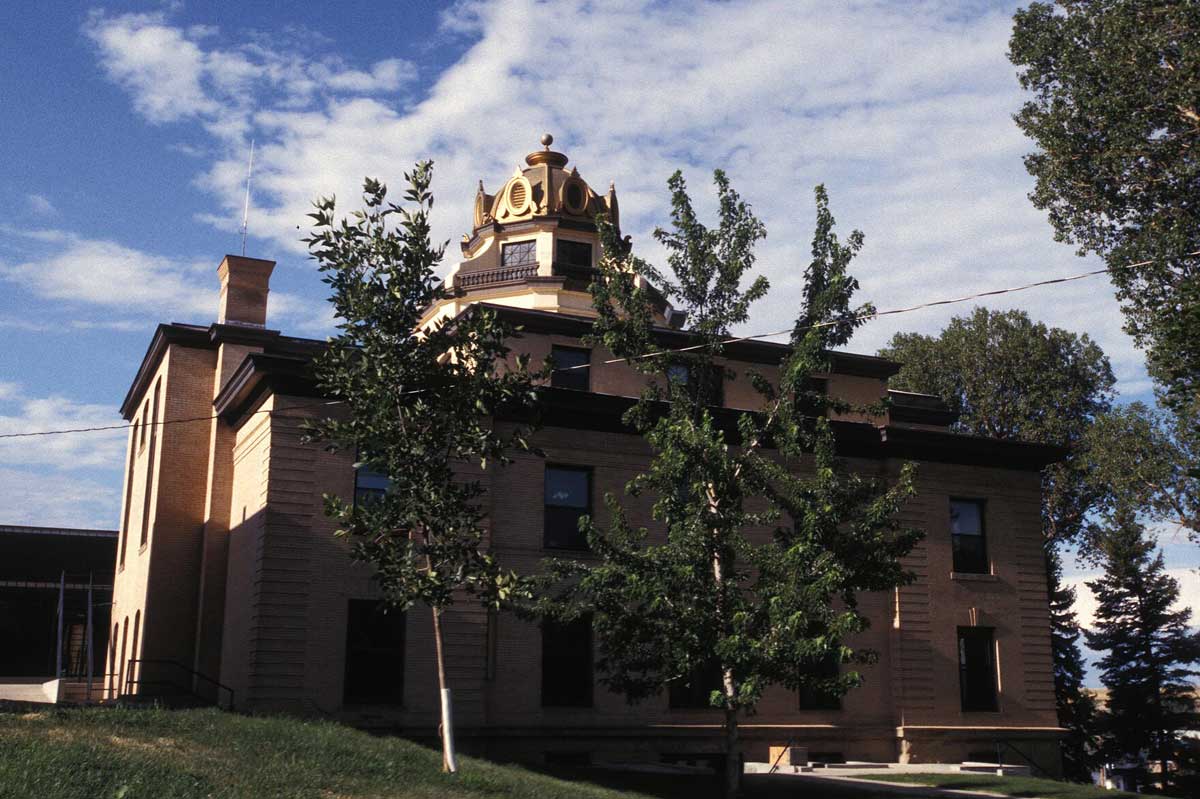
Living in Sheridan, Wyoming: What Buyers and Relocators Should Know
If you’re thinking about moving to Wyoming, you’ve probably discovered pretty quickly that choosing a community is about more than finding a house. Wyoming is a big state, and the experience of living in Cody can be very different from living in Sheridan, Cheyenne, Casper or Jackson. Each community has its own personality, landscape, pace and advantages.
Sheridan is one of the Wyoming communities that deserves a closer look. Located in northern Wyoming at the eastern base of the Bighorn Mountains, Sheridan combines a recognizable Western identity with a surprisingly broad range of everyday amenities. It has a historic downtown, schools, healthcare, local businesses, outdoor recreation and access to major transportation routes, while still maintaining the smaller-community character that attracts many people to Wyoming in the first place. The latest Census estimates put Sheridan at roughly 20,000 residents, with Sheridan County at roughly 33,000.
For someone considering a move to Wyoming, that balance can be important. You may want the open space, outdoor lifestyle and slower pace associated with Wyoming without giving up every convenience of a larger population center. Sheridan offers an interesting middle ground.
What Is Sheridan, Wyoming Like?
Sheridan is large enough to function as a regional community without feeling like a large city. The local economy includes healthcare, education, manufacturing, retail, hospitality, professional services and small businesses, and the city has a historic downtown rather than a landscape dominated entirely by newer commercial development. Sheridan College adds another educational and cultural resource to the community, while the surrounding rural areas provide a very different setting for buyers who want more land.
That combination is part of what makes Sheridan interesting for people relocating from another state. You’re not simply buying a property. You’re choosing the community where you’ll shop, work, send your kids to school, find healthcare, meet people and spend your free time. For some buyers, Sheridan can provide the Wyoming experience they’re looking for without requiring them to give up the infrastructure and services they have become accustomed to.
The Bighorn Mountains Are Part of Everyday Life
One of the defining characteristics of Sheridan is its relationship with the Bighorn Mountains. The mountains rise immediately west of the community, creating a dramatic backdrop and providing access to hiking, fishing, camping, hunting, mountain biking and other outdoor activities. Sheridan also has an extensive pathway system, parks and recreational facilities, while the Bighorns provide a much larger landscape just outside town.
That proximity matters when you’re considering a move. There is a difference between living somewhere that happens to have a mountain view and living somewhere where the mountains can actually become part of your regular weekend—and sometimes weekday—life. For an outdoor-oriented buyer, Sheridan offers the unusual combination of a functioning community with everyday services and employment opportunities sitting directly next to a major mountain recreation area.
Of course, mountain access also means buyers need to think beyond the house itself. Location, winter weather, road conditions, acreage, water, utilities, outbuildings and the practical realities of maintaining property in a Wyoming climate can all become important depending on what you’re looking for.
What Is the Real Estate Market Like?
Housing is obviously one of the biggest considerations for anyone thinking about relocating to Sheridan. Census data provides a useful broad picture: the median value of owner-occupied homes in Sheridan was approximately $340,600 for the 2020–2024 period, while Sheridan County was approximately $394,900. Those numbers are useful for understanding the general market, but they should not be confused with current asking prices or the value of an individual property. Real estate changes continuously, and a downtown home, newer subdivision property, acreage outside town and ranch property can represent very different markets.
That’s why it makes more sense to think about Sheridan real estate as several different markets rather than one. Someone looking for a home close to downtown has different priorities than someone searching for several acres. A family looking for a newer home may have a completely different search from a buyer interested in a historic property or a rural residence with room for horses.
For buyers coming from outside Wyoming, the difference between city property and rural property can be particularly important. Water, wells, septic systems, access roads, covenants, zoning, outbuildings and ongoing maintenance can all become part of the purchase decision. The property itself is only one piece of the equation. Understanding how that property fits into the surrounding community and landscape is just as important.
Is Sheridan a Good Place for Families?
Families considering Sheridan will find a community with established schools, recreational opportunities and a relatively manageable scale. The population includes families, working-age residents, retirees and people who have lived in the area for generations alongside newer arrivals. The city identifies its schools, medical facilities, recreation and community character as important assets, and Sheridan College provides another educational resource.
For a relocating family, however, the practical questions are more important than a generic list of reasons a town is supposedly a great place to live. Where will you live? How far will you drive to work? Which schools serve the property? What activities are available for children? How close are healthcare services? What does winter actually look like? And how much property do you really want to maintain?
Those are the questions that start turning a community into a potential home.
Healthcare, Jobs and Everyday Services
One of the advantages of living in a community the size of Sheridan is that you don’t have to leave town for every basic service. Healthcare is particularly important for families and retirees, and Sheridan functions as a regional center for the surrounding area. The local economy also provides employment across a range of industries rather than depending entirely on one sector.
That doesn’t mean Sheridan offers every specialized medical service or employment opportunity found in a major metropolitan area. Anyone with specific healthcare or career requirements should investigate those needs before relocating. But for everyday life, Sheridan operates as a real regional community rather than simply a small outpost.
The city’s location also gives it useful transportation connections. Sheridan sits along I-90, has BNSF rail service and has the Sheridan Airport, with passenger service connecting the community to Denver. For someone relocating from another state, that connectivity can make a difference. You can have a Wyoming lifestyle without being completely disconnected from the rest of the region.
What About Downtown Sheridan?
Downtown is one of the places where Sheridan’s history and modern community come together. Historic Main Street, local businesses, restaurants, cultural attractions and community events give the center of town a different feel from a typical suburban commercial district. Sheridan’s Western identity isn’t something that exists only in a museum. It’s reflected in the architecture, local businesses, events and culture of the community.
For buyers, proximity to downtown can therefore mean more than simply being close to restaurants. It can mean choosing a particular lifestyle. Some people want to walk or bike into town. Others want a larger lot, more privacy and a little distance from the center. Still others may want acreage where the closest neighbor is well beyond the backyard fence.
There isn’t one correct way to live in Sheridan, and that’s actually one of the things that makes the local real estate market interesting.
Sheridan Isn’t Cody—and That’s Okay
If you’re already researching Wyoming, you may be comparing Sheridan with Cody. That’s a worthwhile comparison because the two communities have quite a bit in common. Both have strong Western identities, both are surrounded by spectacular landscapes, and both attract people who want access to outdoor recreation and a smaller-community lifestyle.
But they are not interchangeable. Sheridan sits beneath the Bighorn Mountains in northern Wyoming and has direct access to I-90. Cody is farther west and has its own unique relationship with Yellowstone, the Absaroka Mountains and the broader northwest Wyoming landscape. The communities also have different real estate markets, employment bases, tourism patterns and local personalities.
For someone trying to decide where to relocate, the question isn’t necessarily which town is better. The question is which one fits the life you’re trying to build.
If you’re comparing Sheridan with Cody, our guide to relocating to Cody is a useful place to start. It takes a similar look at the practical side of moving to the area, including location, services, property and the differences between living in Cody itself and the surrounding communities.
Who Might Enjoy Living in Sheridan?
Sheridan can appeal to several different types of buyers. It may make sense for someone leaving a larger city who wants more space and a smaller community, an outdoor enthusiast who wants the Bighorn Mountains nearby, a family looking for schools and community amenities without metropolitan-scale traffic, or a retiree who wants a Wyoming lifestyle while remaining within a functioning community with healthcare, shopping and other everyday services.
And then there are buyers who simply want Wyoming—not the postcard version of Wyoming or the vacation version, but the version where you have a house, a job, a grocery store, neighbors, winter weather, community events, weekend plans and all the ordinary pieces that make a place home.
That’s really the question to ask when you’re considering Sheridan: Can you see yourself living there, not just visiting?
Thinking About Buying in Sheridan?
If Sheridan is on your list of possible Wyoming destinations, don’t start with the house. Start with the community. Spend some time in different parts of Sheridan. Drive the neighborhoods. Visit downtown. Look at properties at different price points. Think about whether you want a city lot, a larger property or acreage outside town. Consider your commute, access to services, recreation and what you want your weekends to look like.
The same principle applies when you’re researching Cody. REV’s guide to Cody neighborhoods looks at the different areas around town and why choosing a location is about more than what a property looks like in photographs. And once you’ve narrowed down the community and location, the guide to buying a home in Cody covers more of the practical side of the purchase.
Then start looking seriously at the real estate. The right Wyoming property isn’t necessarily the biggest house, the most acreage or the one with the best view. It’s the property that fits the way you actually want to live.
That’s true whether you’re looking in Sheridan, Cody or somewhere else in Wyoming. If you’re considering a move, Sheridan is worth putting on the list—and worth spending enough time in to decide whether it feels like home.