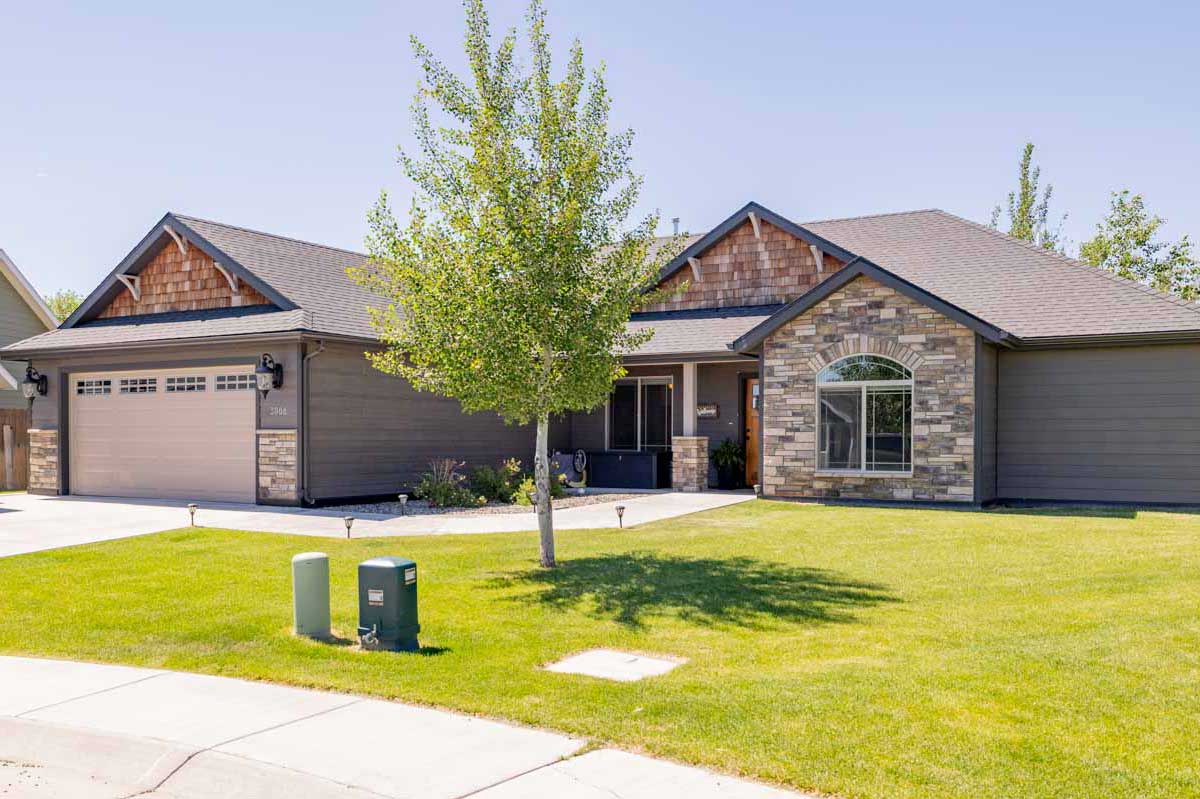
Working Remotely From Cody, Wyoming: What Buyers Should Know
The ability to work remotely has changed the way people think about where they live. A career that once required a daily commute to an office in Denver, Dallas, Seattle or somewhere else may now be possible from a home office almost anywhere with a dependable internet connection. For people who want more space, a smaller community and a closer connection to the outdoors, that opens up some interesting possibilities. Cody, Wyoming, is naturally going to attract some of that attention.
The appeal is easy to understand. Cody offers a distinctive combination of Western character, outdoor recreation, beautiful surroundings and a pace of life that feels different from a major metropolitan area. You can build a daily routine around the landscape rather than a commute. For someone who already has a remote position or operates an online business, the opportunity to live here without giving up a professional career can be compelling.
But there is a practical side to the decision that deserves just as much attention as the lifestyle. Working remotely from Cody isn’t simply a matter of finding a house with a spare bedroom and a good view. Internet availability, cellular coverage, workspace, travel requirements and the location of the property all matter. Some homes may be excellent choices for remote professionals. Others may be less suitable, even if they look perfect in a listing.
If you’re considering a move to Cody while keeping your existing career, there are several things worth understanding before you buy.
Internet Access Should Be Part of Your Home Search
For most remote professionals, internet service is the first practical consideration. It should be evaluated just like heating, water, electrical service and other essential parts of a property.
Cody has several established internet providers. The City of Cody’s utility-provider directory lists TCT, Spectrum and CenturyLink among the companies offering cable, phone and internet services. Depending on the address, buyers may also find other options, such as fixed wireless or satellite service. The important distinction is that availability and performance can vary considerably from one property to another.
A home inside Cody may have different service options from a property several miles outside town. Even nearby addresses aren’t necessarily served by the same infrastructure. Buyers should never assume that because internet service is available in the general area, the specific property will have the connection they need.
Start by checking the exact address with the providers serving the area. The Federal Communications Commission’s National Broadband Map is a useful starting point for reviewing reported broadband availability, connection technology and advertised speeds. The FCC also explains how to search for an address and interpret the map. Follow that research with a direct conversation with the provider. Ask what service can actually be installed at the property, what speeds are offered, whether there are installation costs and whether any data restrictions apply.
Pay particular attention to upload speed. Download speed gets most of the attention in advertising, but upload performance can be just as important for someone who spends the day on video calls, transfers large files, backs up data or works through cloud-based applications. A connection that handles streaming and browsing comfortably may not perform as well when several people are using it for work at the same time.
The right connection depends on what you do professionally. Someone who mainly handles email and online research has different requirements from a designer transferring large files, a consultant spending hours in video meetings or a business owner managing multiple cloud-based systems.
The goal isn’t necessarily to find the fastest advertised service. It’s to find a connection that reliably supports your actual work.
Living Outside Cody Changes the Equation
One of the attractions of the Cody area is the opportunity to find a property beyond traditional residential neighborhoods. Some buyers want more land, privacy, a shop, room for recreational equipment or a home with a little more distance between them and their neighbors.
That can be an excellent fit for a remote professional, but it makes address-specific internet research even more important. Wired broadband may not extend to every rural property, and service options can change as you move away from town. Fixed wireless or satellite connections may provide alternatives, but their performance depends on the technology, equipment, location and service conditions.
If you’re considering a property along the North Fork, South Fork or elsewhere outside Cody, make connectivity part of the early evaluation. Ask providers about the exact location rather than relying on a general coverage map. If a particular connection is essential to your job, find out whether installation is possible and what the actual service will cost before making a commitment.
Satellite service can be a workable option in some locations, but it isn’t automatically equivalent to a wired connection. Equipment placement, a clear view of the sky, weather conditions and the specific service plan can all influence performance. Fixed wireless has its own location and line-of-sight considerations.
This is one reason rural property searches require a broader approach. A home may offer the privacy and setting you want while presenting practical limitations that aren’t obvious in photographs or during a short showing.
Our guide to living on acreage near Cody, Wyoming explores the wider responsibilities and considerations that come with rural ownership. Internet access belongs in that conversation, alongside utilities, access and property maintenance.
The Home Office Deserves Real Consideration
A spare bedroom can become an office, but that doesn’t necessarily make it a good workspace. If you’re going to spend much of your working week at home, the room and its location within the house matter.
Think about noise, privacy, natural light, heating and cooling, electrical outlets and the amount of space you’ll need for your equipment. Someone who spends the day on video calls may want a room with a door and a quiet background. Someone working with multiple monitors, specialized equipment or physical files may need considerably more room.
The location of the office can be just as important as its size. A room next to the kitchen or main living area may be difficult to use during busy parts of the day. A basement office might provide quiet and separation, but lighting and comfort deserve attention. If you expect to have clients or colleagues visit, you may want a workspace that is more separate from the household.
Some buyers will be perfectly comfortable converting a bedroom. Others may prefer a finished basement, a dedicated office or a separate building. The important thing is to think beyond whether a room can technically hold a desk. It should support the routine you expect to maintain.
Also consider the home’s network setup. Multiple computers, monitors, printers, smart devices and other equipment can place different demands on a household connection. A good router, adequate Wi-Fi coverage and wired network connections where needed can make a noticeable difference.
Power and Cellular Coverage Matter, Too
Internet service is only part of staying connected. Electricity and cellular coverage are also important, particularly if your income depends on being available during business hours.
A short power interruption can take out your modem, router and computer, even when the broadband network itself is operating normally. A battery backup, commonly called an uninterruptible power supply or UPS, can keep essential equipment running through a brief interruption and give you time to save work or shut down safely. Depending on your job, a larger backup power solution may be worth considering.
Cellular service provides another layer of flexibility. Your phone may be useful as a hotspot if your home connection fails, and it will likely be your primary connection when you’re away from the house. Coverage varies by carrier and location, especially as you move beyond town or into areas with more challenging terrain.
Don’t rely entirely on your experience with your current carrier in another state. Test reception at the property if possible, both inside and outside the home. If cellular coverage is important to your work, investigate backup options before you buy.
A property with excellent broadband and limited cellular reception may still be perfectly workable. The point is to understand the tradeoffs rather than discover them after moving.
Travel Still Matters Even When You Work Remotely
Remote work doesn’t always mean never traveling for business. Many professionals still need to attend meetings, visit clients, travel to company offices or make occasional trips to other cities.
If that’s part of your job, consider how Cody’s location fits your schedule. Yellowstone Regional Airport provides commercial air service, but flight options and connections are different from those available at a major metropolitan airport. Depending on your destination, travel may involve connecting flights or driving to another airport.
Driving is another consideration. Cody is connected to the surrounding region by highways, but winter weather can affect road conditions and travel schedules. If you occasionally need to be somewhere in person, having flexibility in your schedule and a realistic travel plan is useful.
For someone who travels only a few times a year, this may be a minor consideration. For someone who flies every other week, it could become a significant part of the decision.
The Difference Between Visiting Cody and Living Here
A summer visit to Cody can make a powerful impression. The scenery, outdoor activities and energy around the community are part of what draws people here. But remote work means you’re not simply visiting during the best part of the year. You’re building a daily routine that has to work through every season.
Winter deserves particular consideration. Weather can affect roads, driveways and travel plans. If you work from home, you may not need to commute every morning, but you still need to get groceries, attend appointments and occasionally travel. A property farther outside town may offer the privacy and setting you want, but its winter access, road maintenance and snow removal arrangements deserve attention.
There is also a difference between enjoying Cody as a visitor and making it your everyday home. Remote work can make it easier to enjoy the area, but it doesn’t mean every day feels like a vacation. You’ll still have deadlines, meetings and ordinary workdays. The advantage is that your surroundings and the time outside work may be very different from what you have now.
For a closer look at the seasonal adjustment, our article on what to expect during your first Wyoming winter explores some of the realities that are easy to overlook when visiting during the warmer months.
Make Sure Your Employer Allows the Move
One detail buyers sometimes overlook is whether their employer actually permits them to work from Wyoming.
Some companies allow employees to work remotely from anywhere in the country. Others have restrictions based on payroll registration, tax obligations, insurance, company policies or the states where they are authorized to employ people. A position described as remote doesn’t automatically mean an employee can relocate anywhere without approval.
If you’re employed by a company based elsewhere, confirm that Wyoming is an approved work location before making the move. Get a clear answer from the appropriate person or department rather than relying on an informal assumption.
Self-employed professionals and business owners have a different set of considerations. They may have more flexibility over where they work, but they still need to think about clients, business operations, professional licensing where applicable and the practical requirements of running a business from a smaller community.
The move should make sense professionally as well as personally.
Is Cody a Good Fit for Remote Professionals?
For the right person, it can be.
Cody offers a different environment from the large cities where many remote professionals have built their careers. You may be able to trade a long commute and a crowded schedule for a home with more room, a closer relationship with the outdoors and a community where everyday life feels less hurried.
But the right fit depends on what you need from a location. Someone who wants an urban environment, extensive public transportation, frequent direct flights and a large professional network may find the adjustment difficult. Someone who values outdoor recreation, a smaller community and the ability to work independently may find the tradeoff worthwhile.
It is also worth thinking about the difference between living in Cody itself and buying farther outside town. A home in town may offer convenient access to services and more straightforward internet options. A rural property may offer more privacy and space, but connectivity, access and maintenance deserve closer attention.
If you’re evaluating the broader move, our guide to relocating to Cody, Wyoming provides additional perspective on the community and the practical questions that come with making the area home. Buyers comparing specific parts of town can also explore our Cody neighborhoods guide.
What to Verify Before You Buy
Before making an offer, confirm the details that will affect your ability to work comfortably from the property. Contact internet providers with the exact address and ask what connection types and plans are available. Check upload as well as download speeds, and ask about installation costs and service limitations. If possible, test the connection at the property rather than relying only on advertised figures.
Check cellular coverage with your carrier. Think carefully about where your home office will be located and whether the space will work for your daily routine. Consider backup power and internet options if your work cannot tolerate interruptions. If you travel for business, review flight connections and winter driving requirements. And if you’re employed by a company outside Wyoming, confirm that the relocation is permitted.
These steps are straightforward, but they can prevent an expensive mistake. A home office can be improved, equipment can be upgraded and some internet connections can be expanded. But you cannot assume every property can be made to support the same working arrangement.
Finding a Cody Home That Works for Your Life and Your Career
The ability to work remotely has changed the way many people approach a home search. Instead of choosing a location based entirely on an office commute, buyers can give more weight to lifestyle, community, space and the kind of environment they want around them.
Cody is an appealing possibility for that kind of move. But the right property is about more than the view outside the window. It needs to support the work that makes the lifestyle possible.
For one buyer, that may mean a home in town with a dependable wired connection and a dedicated office. For another, it may mean a rural property with enough space for a separate workspace and a reliable alternative internet connection. Neither choice is automatically better. The right answer depends on the way you work and the way you want to live.
At REV Cody, we believe those questions belong in the property search from the beginning. If you’re considering a move to Cody and plan to keep working remotely, we can help you evaluate the location, the property and the practical details that may influence your decision.
The goal isn’t simply to find a house in Wyoming. It’s to find a place where your work, your home and the life you want to build can fit together.