Cody Home Prices Explained: What Buyers Actually Get for Their Money
If you start looking at homes in Cody, Wyoming, you’ll quickly discover that price alone doesn’t tell you very much about what you’re getting. A three-bedroom home in town, a newer house with a larger lot, and a rural property with acreage, a shop, and mountain views can all fall into very different price categories. Even properties that look similar in photographs can have substantial differences in asking price.
That’s because the Cody real estate market isn’t simply a matter of comparing square footage and bedroom counts. Location, land, construction quality, condition, improvements, access, and the type of property all influence value. For buyers relocating from another state, understanding those differences is particularly important. What looks like an expensive home in one category might represent a reasonable purchase in another, while a seemingly attractive price can conceal additional costs that aren’t immediately obvious.
The better question isn’t simply how much homes cost in Cody. It’s what your money actually buys.
Understanding the Cody Real Estate Market
Cody has a relatively varied housing market for a community its size. Buyers can find established homes near downtown, newer construction, properties in residential developments, homes with larger lots, and rural properties throughout the surrounding Park County area. There are also ranch properties, recreational properties, and homes with substantial acreage that appeal to a very different type of buyer.
That variety makes broad market averages somewhat misleading. A month with several high-value rural property sales can influence the median price without necessarily changing the value of an ordinary home in town. The same is true in reverse.
The Northwest Wyoming Board of REALTORS® publishes regional market statistics covering residential sales, active inventory, sale prices, days on market, and land transactions. Its Northwest Wyoming real estate market report is a useful starting point for understanding broader market conditions. However, regional figures should not be confused with Cody-specific statistics. A meaningful evaluation of a particular home requires looking at comparable properties in the same market and accounting for their individual characteristics.
Cody also shouldn’t be evaluated in isolation. Buyers looking throughout Park County may find considerably different options in Powell, the South Fork, the North Fork, and other surrounding areas. Each location offers a different combination of convenience, land, scenery, and access to services. Our Cody vs. Powell comparison looks at some of those differences.
Buying a Home in Town: Location and Convenience
For buyers who want to live close to downtown Cody, location can be just as important as the house itself. Established neighborhoods offer convenient access to shopping, restaurants, schools, medical services, and community activities. Depending on the property, buyers may also find mature landscaping, established streets, and larger lots than they might expect in newer developments.
Many homes in these neighborhoods have been around for decades. Some have been carefully maintained and updated, while others offer opportunities for buyers willing to take on improvements.
An older home isn’t automatically a disadvantage. Construction quality, maintenance history, layout, and the condition of major systems are more important than the year on the original building permit. A well-maintained older property in a desirable location may offer considerably more practical value than a newer house with fewer desirable features.
Buyers should pay attention to the roof, heating system, plumbing, electrical, windows, foundation, and previous renovations. A freshly remodeled kitchen might look impressive, but it doesn’t tell you much about the condition of the rest of the house.
For a closer look at the buying process, our guide to buying a home in Cody, Wyoming covers the broader considerations involved in purchasing a property here.
Newer Construction and Residential Developments
Newer homes appeal to buyers who want modern layouts, updated kitchens and bathrooms, attached garages, and fewer immediate maintenance projects. They can also offer better insulation, more contemporary mechanical systems, and floor plans designed around how people live today.
However, newer doesn’t necessarily mean better value.
Some developments have more standardized lot sizes, less separation between neighboring properties, and restrictions that limit how owners can use their property. Buyers who want space for recreational equipment, additional storage, gardens, or animals may find that an established property with a larger lot better meets their needs.
Construction quality also deserves attention. Materials, workmanship, drainage, orientation, and the quality of mechanical systems can vary considerably. Two homes built within a few years of each other may have very different long-term maintenance requirements.
The important thing is to determine whether the additional purchase price reflects meaningful improvements and features you’ll actually use.
What Changes When You Buy Outside Cody?
Once you move outside the city, you’re often comparing entire properties rather than houses.
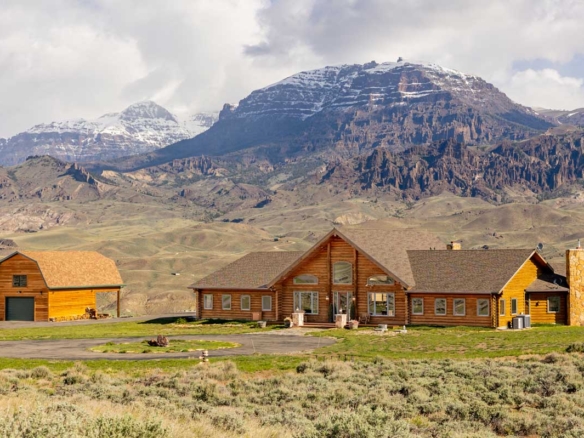
A rural home might include several acres, a private well, septic system, fencing, irrigation, a detached shop, storage buildings, or space for livestock. Those features can add substantial practical value, particularly for buyers who want more independence and room to work or recreate.
But acreage isn’t automatically valuable simply because there is more of it.
The usability of the land matters. Is it level or steep? Is it irrigated? Does it have adequate access? Are there restrictions on how it can be used? Are the water rights, well, septic system, and other improvements appropriate for the buyer’s plans?
A property with five usable acres and a well-maintained shop may be more attractive to a particular buyer than a much larger parcel with limited access and few improvements.
Rural properties also require a different approach to evaluating ongoing expenses. Wells, septic systems, private roads, fencing, outbuildings, and larger areas of land all require maintenance. Buyers should understand those responsibilities before deciding that a rural property represents a bargain.
For people relocating from suburban areas, this can be a significant adjustment. The freedom and space are appealing, but owning rural property involves more than maintaining a house and mowing a lawn.
Our article on buying a home outside Cody and the realities of rural living explores these considerations in greater detail.
Why Similar Homes Can Have Very Different Prices
Square footage is useful when comparing homes, but it shouldn’t be treated as a complete measure of value.
Consider two houses with approximately 2,000 square feet. One might have a smaller lot, an older kitchen, and a roof nearing the end of its useful life. The other might have a larger lot, a newer roof, updated mechanical systems, and an attached garage.
Although their interior sizes are similar, their actual value to a buyer may be quite different.
Location, basement space, garage capacity, landscaping, views, construction quality, and the condition of major systems all contribute to the comparison. In Cody, the differences become even more pronounced when rural properties enter the picture.
Price per square foot can provide a useful starting point, but it shouldn’t determine what a property is worth. Automated online estimates have similar limitations. They can identify basic characteristics such as bedrooms and square footage, but may not adequately account for land usability, outbuildings, access, or other features that distinguish one property from another.
Park County provides access to property information through its County Assessor’s property resources, including property characteristics, valuation information, and assessment procedures. These records can help buyers understand the property being considered, although assessed values and market values serve different purposes.
This is one reason local comparable sales are so important. A meaningful comparison involves properties that offer similar characteristics, not simply houses with similar dimensions.
Is a Less Expensive Home Actually the Better Buy?
Not necessarily.
A lower-priced home can be an excellent opportunity if the structure is sound and the improvements needed are manageable. It can also become an expensive project if the roof, heating system, plumbing, windows, or other major components need attention.
Consider a home listed at $400,000 that requires $75,000 in improvements. A comparable property listed at $475,000 might already have those improvements completed. The initial purchase prices are different, but the actual financial commitment may be remarkably similar.
There are other considerations, too. Renovations take time, require planning, and can involve unexpected expenses. Buyers relocating to Cody may not have the local contractor relationships or familiarity with suppliers needed to manage a major project easily.
On the other hand, buyers who are comfortable with renovations may find opportunities in older homes that other buyers overlook.
The important thing is to evaluate the total cost of getting the property into the condition you want, not just the asking price.
Acreage, Luxury Homes and Higher-End Properties
Cody’s higher-end real estate market includes custom homes, larger residential properties, ranches, and homes with significant acreage or exceptional views.
These properties are particularly difficult to compare using conventional residential measurements. A custom home on several acres with a large shop, established landscaping, and substantial improvements isn’t competing directly with a similarly sized house in a subdivision.
The value may be tied as much to the property itself as to the house.
For ranch and agricultural properties, additional considerations include water rights, irrigation, productive acreage, fencing, buildings, access, and permitted uses. Buyers need to understand what they’re purchasing and how those features contribute to the property’s practical and financial value.
For properties with private wells, the Wyoming Department of Environmental Quality offers useful guidance through its Know Your Well program. Private well owners are responsible for maintaining their water systems and arranging appropriate water-quality testing. Buyers should investigate the well’s condition, water supply, and testing history rather than assuming that an existing well automatically means everything is in order.
Land use is another important consideration. Park County’s Planning and Zoning Department provides information about development standards, zoning, permitted uses, and applicable building and wastewater requirements. These details can make a substantial difference if you intend to add buildings, subdivide land, or use a property for a particular purpose.
The same principle applies to luxury homes. Expensive finishes and impressive photography don’t automatically establish market value. The location, quality of construction, surrounding properties, and actual buyer demand all matter.
There may also be fewer directly comparable sales in this category, making knowledgeable local guidance especially useful.
Is Cody Real Estate a Good Value Compared With Other Markets?
That depends on where you’re coming from and what you’re looking to buy.
Someone relocating from Denver, Boulder, or another expensive metropolitan area may find that Cody offers opportunities for more land, additional space, or a different kind of property than they could afford in their previous market. Someone moving from another Wyoming community may have a very different perspective.
Cody isn’t necessarily the least expensive place to buy a home in Wyoming. Its location, community amenities, scenery, outdoor recreation, and proximity to Yellowstone contribute to its appeal.
Buyers should also consider the complete cost of ownership, including property taxes, insurance, utilities, maintenance, and transportation. A home with a lower purchase price isn’t necessarily less expensive to own over time.
For people moving from out of state, it’s worth looking beyond the listing price and considering how the property fits into the life they’re planning to build here.
What Buyers Should Evaluate Before Making an Offer
Before making an offer, take the time to understand the property rather than relying entirely on its listing description.
For an in-town home, pay attention to the condition of the structure, roof, foundation, heating system, plumbing, electrical, windows, drainage, and major improvements. Understand what has been updated and when.
For rural properties, expand that evaluation to include water, septic, access, utilities, fencing, outbuildings, irrigation, and any applicable restrictions. If acreage is part of the purchase, determine whether the land is actually suitable for your intended use.
Then look at recent comparable sales. What have similar properties actually sold for? How long have comparable homes been on the market? Are current asking prices consistent with completed transactions?
These questions are more useful than simply deciding whether a listing looks inexpensive or expensive.
This is particularly important for buyers shopping remotely. An online listing can provide a good introduction to a property, but it can’t replace an understanding of the neighborhood, the surrounding land, and the practical details that influence ownership.
Finding the Right Property in Cody
There isn’t one price that defines a good home in Cody. Buyers can find very different opportunities depending on whether they’re looking for an established home near downtown, newer construction, a larger residential lot, rural acreage, or a property with room for animals and equipment.
The best starting point is to decide what matters most. Do you want to be close to downtown? Would you prefer newer construction? Do you need a shop or additional storage? Is acreage important, or would you rather have a manageable property with convenient access to services?
Once those priorities are clear, comparing homes becomes much easier. You’re no longer trying to compare properties that have very little in common.
At REV Real Estate, we work with buyers exploring everything from in-town homes to rural properties, land, ranches, and larger residential properties throughout the Cody area. If you’re beginning your search, explore our Cody buyer resources and browse the properties currently available.
The right home isn’t necessarily the least expensive one or the one with the most square footage. It’s the property that gives you what you actually want, at a price that makes sense for what you’re buying.